
Don’t miss this event — for a dozen urgent reasons!
– Abhay Shukla
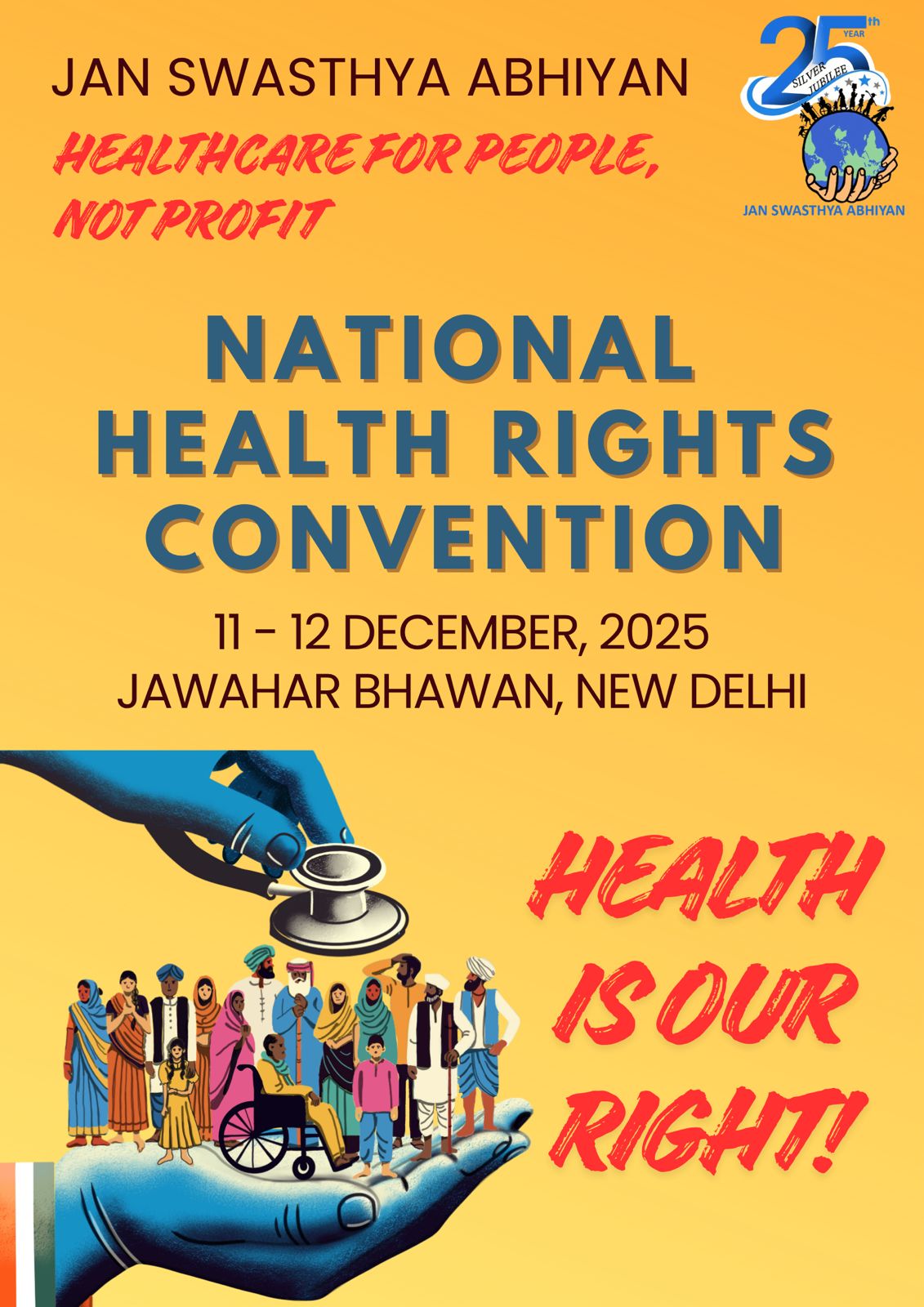
These are the best of times for those with power and corporate wealth, and the worst of times for the vast majority of people in India today. In these paradoxical and difficult times for public health, the National Convention on Health Rights (11–12 December 2025, New Delhi) promises to be an act of solidarity, resistance, and collective hope. Organized by Jan Swasthya Abhiyan (JSA) in collaboration with a wide range of like-minded networks, civil society organizations, health professionals, community leaders, workers unions, social and health activists, this convention is being held at a time which signifies a turning point in the health movement.
In a period defined by the rising tide of divisive politics, by massive suffocation of public spaces, of misinformed virtual mobs along with real social fragmentation and isolation, the National Convention on Health Rights is an opportunity for us to combine our positive energies, to share our stories and ideas, to embrace our comrades, and to remember our shared power. Hence this blog is more than an invitation; it is a call to join the action. In the face of unprecedented challenges, our coming together in this convention is not merely desirable — it now appears as a critical step for the survival of health movements, and to take forward common visions for health rights in India.
A dozen reasons why all of us need to join our voices in this National Convention …
1. To sound the alarm on the Health system crisis
India is today experiencing a serious health system crisis, whose symptoms are increasingly visible everywhere. Despite the catastrophic COVID experience, no lessons seem to have been learned or acted upon. Public health services are the foundation of any health system, which remain the refuge for the deprived and vulnerable everywhere, keeping in view that more than 80 crores of our working population depend on the PDS system and public provisioning for basic needs. These services were expected to be urgently upgraded and expanded after the pandemic. Yet the reverse prescription is being ruthlessly delivered as public services are being severely underfunded and understaffed, while being subverted through contractualisation and outsourcing. Given this context, the Convention is our joint platform to sound the alarm for society about the rapidly deteriorating state of public health, while also coming together to share the many experiences of resistance and mobilisation around health rights across the country, and to rebuild a unified programme and convergence of movements for the Right to health and healthcare.
स्वास्थ्य का संकट है गहराया, एकजुट होने का समय है आया !
2. To halt the privatisation of Public health services

The not-so-hidden agenda underlying the starving of public health institutions is the ongoing aggressive push for privatisation of medical colleges, district hospitals and public health services across the country. This accelerated handing over public institutions to profiteering private players is being justified under the garb of ‘Public – Private Partnerships’. The push for privatization threatens to dismantle already weakened public health services, while making services unaffordable and inaccessible for vast sections of the population, who depend on free public healthcare. Hence one of the themes at the Convention is to Oppose privatisation of public health services – which will be taken up in a session where we will hear stories of inspiring movements from various parts of the country which are uniting people to stop the sale of public hospitals and health facilities. This will be combined with critical analysis and recent evidence about public–private partnerships which undermine health systems.
सरकारी अस्पताल हैं जनता के आधार – बंद करो इन्हें बेचने का कारोबार !
3. To reclaim and strengthen public health services, necessary now more than ever
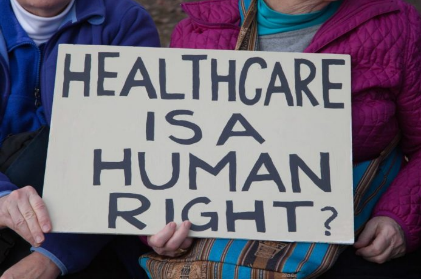
Another of the Convention’s themes is to Strengthen public health services and ensure the right to healthcare for all. In the session on this theme, there would be sharing of impactful models of community mobilisation for claiming health rights, stories of positive change through reclaimed health services, along with discussions on strategies for improving public health services in a rights-based policy framework. Emerging as an alternative to the dominant privatisation agenda, we are now crafting a powerful counter-narrative on the right to health care – both ‘from above’ as initiatives for acts and policies, and ‘from below’ as people’s actions – to confront the health system crisis. We will deliberate on how to advance healthcare as a fundamental right, while placing a robust, universal and responsive public system at the centre of India’s health vision.
जन स्वास्थ्य सेवाओं का विस्तार और सुधार – ले कर रहेंगे सबके लिए स्वास्थ्य का अधिकार!
4. To regulate commercial private hospitals and protect patient rights
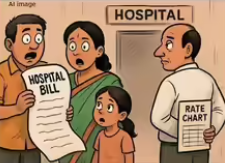
While public health services suffer from severe policy neglect, everywhere commercial healthcare is booming, fuelled by massive foreign and domestic investments and pro-corporate policies. Due to deliberate paralysis of regulation and blocking accountability of the commercialised private sector, exploitative pricing and overcharging, unnecessary investigations and procedures, lack of basic transparency of rates, violation of basic patients’ rights, and woefully inadequate grievance redressal systems are the widespread norm, which are devastating people.
Hence another of the Convention’s themes is Regulate private healthcare and protect patients’ rights — demanding long overdue implementation of basic regulations like rate transparency and standardisation through Clinical Establishment Acts, along with legally binding observance of the Patients’ rights charter, and accessible, fair grievance redressal systems for patients. Impactful experiences of people’s mobilisation to make private hospitals accountable, as well as updates about Jan Swasthya Abhiyan’s PIL for private healthcare regulation would be shared during the session on this theme.
मरीजों की परेशानी, प्राइवेट अस्पतालों की मनमानी – नहीं चलेगी!
5. To demand adequate and fair healthcare financing — moving beyond insurance based ‘scheming’

As we know India’s public health spending remains among the lowest in the world, while out of pocket spending remains unacceptably high, despite jugglery of numbers to cover up this dismal reality. The less our governments spend on public health systems, the more we as people are forced to spend on our health care. Keeping in view this critical concern, one of the themes of the convention is on Healthcare financing – Reduce out of pocket spending, increase public financing, replace health insurance schemes. During this session resource persons and activists will unpack and analyse the current dynamics of health budgets and financing, while charting paths for enhanced and fair public health funding and directions to majorly reduce out-of-pocket spending on healthcare, which is a growing crisis not only for working people but also the middle class. The ground level experience of current commercially driven health insurance schemes will be critically analysed, while proposing a health financing system that is public-centred, equitable and redistributive, rather than profit-driven.
नहीं चाहिए बीमा का अधूरा वादा, मुफ्त और पूरी स्वास्थ्य सेवा हमारा इरादा !
6. Because all health workers deserve justice and dignity
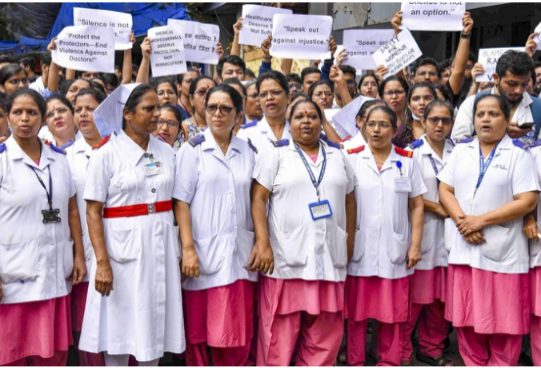
The Convention recognises that health workers — doctors, nurses, ASHAs, ANMs and other frontline health workers, wide range of contractual health staff, safai karmacharis and more — are the backbone of our health system and society. We woke up to their critical and lifesaving roles during the COVID pandemic, yet still these life savers face contractual employment with low wages and precarious work conditions, lack of basic social security, often hazardous working conditions, and low respect from the system. Hence a further theme during the convention is on Justice and dignity for all health workers. During the related session we will hear the voices of a wide variety of health workers, learning from their struggles and building much-needed solidarity for regularization of employment, fair wages and working conditions, occupational safety and social security, and democratisation of workplaces. The convention would be a space for voices to be heard, testimonies to be shared, and coalitions to be strengthened.
स्वास्थ्य कर्मचारी हैं देश की जान – इनको चाहिए न्याय और सम्मान!
7. To ensure affordable and rational medicines for all

We are all aware how the expenditure on medicines forms a huge chunk, often in the range of around half of household healthcare spending. Despite regulatory provisions, over 80% of medicines remain effectively beyond drug price control. Proliferation of irrational drugs and combinations, and unethical pharma marketing practices further worsen this situation. With this background, another theme during the Convention is on Ensuring access to quality and affordable medicines, stopping profiteering by pharma companies which will highlight the urgent need for affordable, quality medicines, rational drug pricing, and strict control on pharma profiteering. The related session would involve discussion on a pro-people pharmaceutical policy which would place all essential medicines and devices under effective price control, would restore cost-based pricing, while eliminating irrational drug combinations and unethical marketing practices. The importance of strengthening public sector medicine and vaccine production, and demand for abolition of GST on medicines will be part of the deliberations towards charting a people-centred agenda for medicine affordability and pharmaceutical justice.
भरोसे की दवाइयां और खर्च हो कम, दवाओं पर मुनाफाखोरी करो खतम!
8. Because gender and social justice, secularism are at the heart of public health
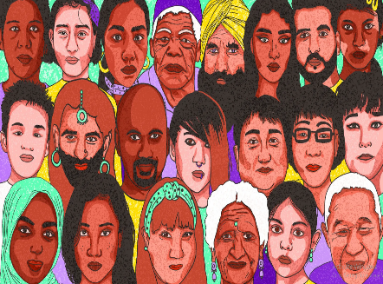
Public health in India is deeply impacted by the pervasive social hierarchies which shape who falls ill, who suffers, and who receives or does not receive care. Along with social class – gender, caste and ethnicity, religion, sexuality, age, geography, and disability continue to reinforce health inequities in powerful ways. Women, LGBTQ+ persons, Dalits, Adivasis, Muslims, migrant workers, refugees, persons with disabilities, and other marginalised groups face a double burden: higher exposure to ill health and the steepest barriers to accessing health services. These barriers stem from historical injustice, discrimination within health systems, cultural and linguistic exclusion, and the state’s failure to design services that meet diverse needs.
Health systems in India today are also being impacted by the rising tide of communalism and manufactured hatred. Denial of care to Muslims, other minorities and migrants, psychological trauma from sustained and targeted hate, and the breakdown of health services in conflict-affected areas show how prejudice directly impacts on people’s health.
Given this background, another session during the Convention is on Ensuring gender and social justice in health, which would provide a vital space to bring the voices of diverse affected communities and their lived realities to the centre of our collective agenda. We would share experiences and strategies to challenge structural discrimination, and initiatives to promote an inclusive health movement grounded in respect for diversity, dignity and rights. We must come together to reimagine and demand health services that are free from exclusion and discrimination, while demanding equitable, quality services for all—especially those who are marginalised. By placing gender and social justice at the core, we can build a health system that leaves no one behind.
सामाजिक और लैंगिक विषमता मिटायेंगे – सबके लिए स्वास्थ्य अमल में लायेंगे!
9. Because our health is critically shaped by food security and living conditions, the environment and the climate crisis
Our health is basically determined by our livelihoods and access to essentials of life such as food and water, our environments, and the larger ecosystem. Today social determinants of health are very unequally allocated, and related systems are under massive strain with worsening food security and malnutrition, polluted air and water, deforestation and unsafe urbanisation driving illness on a massive scale.
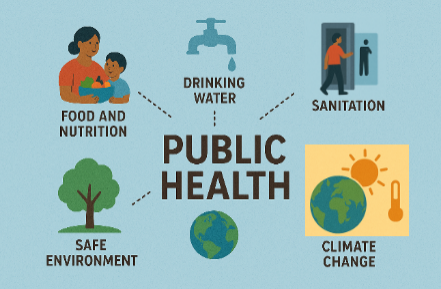
The convention places a critical focus on the social and environmental determinants of health, recognizing that malnutrition from food insecurity, respiratory illnesses from polluted air, and pandemics fuelled by ecological destruction are core health challenges of our time. Climate change is intensifying existing vulnerabilities — from heat stress and vector-borne diseases to crop failures, forced migration, and the disproportionate impact on working people everywhere. Hence the Convention theme on Social determinants of health, environmental health and climate change – to bring together health, right to food, environmental justice and allied movements. The related session will be a space to discuss and integrate our analysis of these wider determinants of health, while strategising cross-sectoral action towards ensuring a healthier and more sustainable future for all.
स्वास्थ्य के सामाजिक कारक, पर्यावरण की तबाही – हमें इन पर चाहिए ठोस कार्यवाही!
10. To place public health squarely on the political agenda
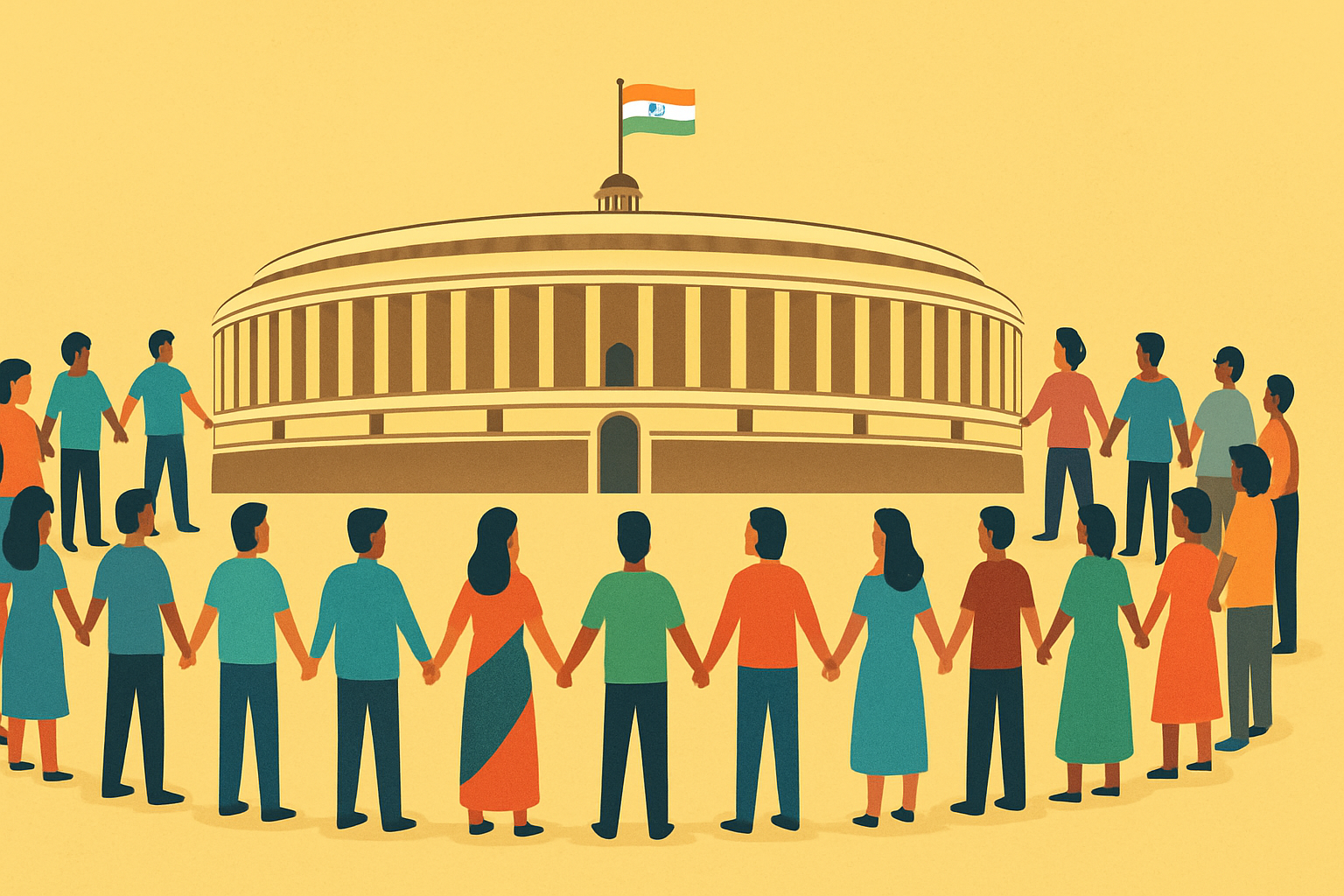
This Convention is being organised during the Winter Parliament session, and Members of Parliament from various parties are being invited to engage directly with the JSA delegates from across the country. The special session on dialogue with Parliamentarians intends to raise the visibility of critical health policy issues, while informing national political debate. Based on all the mentioned themes, we would propose specific policy actions to be pursued within and outside Parliament – related to improving public health systems and healthcare financing, opposing privatisation, regulation of private hospitals, ensuring justice for health workers, ending discrimination and exclusion in health systems, while promoting action on social determinants of health.
Through this session we will collectively emphasise that health rights must become a national political priority, while conveying people’s lived realities and seeking ongoing relationships and communication channels with receptive elected representatives. Putting health rights on the political agenda requires our collective presence and articulation, and we are in position to shape the political discourse on health at national level through our combined engagement.
11. To reactivate our alliances and build new solidarities
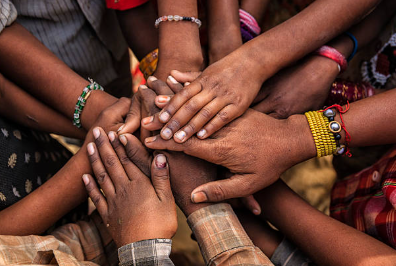
The Convention offers a vital opportunity for re-energising the involvement of various existing networks which are part of JSA, while also forging new alliances. At a time when social movements and civil society organisations in India face majorly shrinking spaces and growing fragmentation, this convention will bring together members of existing constituent networks of Jan Swasthya Abhiyan (such as AIPSN, NAPM, BGVS, AIDWA, FMRAI, Right to Food campaign, Lok Manch, NFIW, CMAI, MFC and others) as well as various national resource groups, along with newer like-minded social campaigns and networks such as All India Forum Against Privatisation, Sarvatrika Arogya Andolana Karnataka, Progressive Medicos and Scientists Forum, Public Services International, anti-privatisation movements from different states and others. Many socially active health professionals, academics and public health activists are individually supporting the convention, both through their direct participation, and also through intellectual and financial contributions. There should be no doubt that concerning this event, even those who may have had some differences of opinion with JSA in the past, should consider participating and supporting the convention in a spirit of rebuilding broader solidarity, towards strengthening the unity of health movements today and in the future.
By reconnecting long standing partner networks and building new solidarities, the Convention will help us to broaden the fronts of resistance around health rights, which is essential in the challenging policy environment of India today. This national convention in 2025 being organised by JSA and allies can be viewed as a crucial step forward in developing a much-needed strategic counter initiative and popular narrative on health rights in India today. It is a space where we can move from critiquing and reacting to policies, towards proactively and collectively setting the health rights agenda for India in the coming decade.
12. To rebuild and celebrate Jan Swasthya Abhiyan — in our 25th year of action

Jan Swasthya Abhiyan was founded on 1st December 2000 during the first National health assembly, held at Kolkata. This year in December we complete 25 years of Jan Swasthya Abhiyan as well as the global People’s Health Movement. Despite many obstacles and challenges, we have moved forward over a quarter century of debates, campaigns, alliances, advocacy initiatives and lessons. And as we convene once again during this convention for rebuilding the movement, we will remember our two and a half decades of shared activism, resistance, policy critique, and community organising – the highs as well as the lows, the sharp debates as well as the shared purpose and vision which has ultimately enabled us to work together. Despite many differences and even some disruptions, we have continued to move forward, while recovering from temporary setbacks. The Convention is an opportunity to honour the legacy of Jan Swasthya Abhiyan and the People’s Health Movement, a moment to reflect, rejoice, learn, and plan for the coming years of mobilisation and organisation. As we salute our senior activists who are moving into advisory and supportive roles, a renewed leadership of JSA is emerging including many younger activists, taking up the flag for the next generation of struggles for health rights across the country.
How the convention is being organised
Over the two days (11–12 December), the Convention will broadly include the following sessions and activities:
- Opening plenary (11 Dec morning) with social movement leaders, leading public health practitioners and experienced activists. This plenary will help to set the broader context and would outline the overall agenda for the Convention.
- Thematic sessions (11 Dec afternoon) on these four themes – Strengthening public health systems and right to healthcare; Opposing privatisation of public health services; Healthcare financing including public financing, out of pocket spending and health insurance schemes; Ensuring justice for health workers. Two thematic sessions would be held in parallel venues in each time slot of 1.5 hours.
- Dialogue with Members of Parliament (11 Dec evening): Held during the Parliament session to place public health firmly on the national political agenda.
- Thematic sessions (12 Dec morning) on these four themes: Regulating private healthcare and protecting patients’ rights; Access to quality and affordable medicines; Ensuring gender and social justice in health; Social and environmental determinants of health, climate change
- Closing Plenary (12 Dec afternoon): Here after brief reporting of action points from the Thematic sessions, representatives of JSA networks will express endorsements, JSA state units and outlines next steps for collective mobilisation.
Each of the Thematic sessions will be co-anchored by JSA co-convenors and concerned activists to facilitate grounded, participatory dialogue. Thematic papers are being drafted for each of the themes, which would be circulated in advance as background for the sessions. The sessions would include testimonies from patients, health workers, community members and real stories of struggle and resilience; short presentations on each key theme and specific issues of interest under the theme; open discussions involving the participants and summarisation of action points for further joint action by JSA constituents on each theme.
A range of cultural activities, skits and songs will be presented throughout the flow of the convention programme. A national media briefing is also being planned towards the end of the programme, to help publicise the emerging policy proposals and charter of action points.
A Call to All
This Convention is an important forum for everyone who believes that each of us is entitled to good quality and accessible health services, and that health is a basic right. You will find this convention especially relevant if you are from any of these backgrounds –
- Member of a community group or grassroots organization
- A health or social activist involved any area related to people’s health
- A health professional or health worker (doctors, nurses, frontline health workers, paramedics, hospital staff or other)
- A student, especially from healthcare professions or public health
- Organiser of a trade union, workers organisation or mass organisation
- Academics, public health professionals and researchers
- Patients and caregivers, people with lived experience of denial, deprivation or violation related to healthcare
- Concerned individuals who are interested in public welfare, democracy and social justice
Do join the event, share your stories and raise your voice along with many others to promote health rights for all!
Together, we can make this convention possible – and your contribution is important!
The National Convention is being organised in Jan Swasthya Abhiyan’s spirit of shared effort, collective responsibility, and voluntary contributions to the health movement. Practically all the participants for this convention would be travelling through their own resources or through locally organised support. The expenses for the stay, food and subsidised venue are being organised through decentralised contributions, in keeping with health movement traditions of relying on voluntary efforts and resources, which enable us to continue as a vibrant, uncompromising platform on people’s health rights.
With this spirit, we invite you to be part of making this people’s convention possible. You can contribute in any way that you find appropriate — as a volunteer, through making a financial contribution, or through offering organisational support and mobilising participants. Your contribution will strengthen our ability to host delegates qqfrom across states, prepare advocacy materials, and meet essential logistical needs – see below for contacting in this regard.
To conclude – what we aspire to collectively move towards
By joining this Convention, in brief we seek to move ahead together on all these fronts linked with defending and promoting the Right to Health –
- Resist the privatisation and commercialisation of healthcare
- Reclaim public health systems and democracy
- Regulate private healthcare and the pharma industry
- Reduce out of pocket spending and Reconfigure healthcare financing
- Recognize and respect health workers as lifesavers to be valued and treated fairly
- Reinforce rights in health systems, to Redress gender inequities and all forms of social exclusion and marginalisation in health
- Respond to the food, environmental and climate crises
- Reinvigorate and rebuild health movements from grassroots to state and national levels, with Renewal of leadership based on younger organisers and grassroots activists
- Reconnect with existing and newer allies, and community struggles
- Raise public health as a political issue, Represent our shared health rights agenda to parliamentarians
- Reimagine our narratives, agendas and strategies in keeping with the emerging situation, Rise and Resolve to meet the challenges in the coming period
- Recharge, Rejoice and Remember 25 years of struggle and solidarity by Jan Swasthya Abhiyan, which has extended across so many states and areas, has involved so many of us in different forms, and has grown through so many collaborative efforts, since the People’s health assembly process in the year 2000.
Join hands with all of us to enrich the National Convention on Health Rights, a moment where lessons of past struggles will meet fresh energies for the future, translated into our joint call to action on the Right to Health. Let us make this our moment to reclaim health rights for all!
Register to confirm your joining the convention here –
For making queries, or to contribute to the convention, do contact – jsanationalsecretariat@gmail.com
For updates about the convention programme and related documents, see –
www.phmindia.org/national-convention-2025
स्वास्थ्य हमारा अधिकार – मत करो इसका व्यापार!
Health is our right – Healthcare for people, not for profits!
Health is not a fundamental right at present, but a right under the DPS policy.
However, it forms a basic right to a decent quality of life.
There is NO HEALTH WITHOUT ORAL HEALTH.
All the NCDs should be targeted by a common risk factor approach of awareness about Tobacco, Sugar and lifestyle changes.
Banking the use of Tobacco, and decreasing the use of Sugar by 50%, along with leading a healthy life will go a long way in taking care of our population.
Good effort
Good one
Health is our right. Good health want every person. So better facility provide to all by the Government.
NEED OF THE HOUR…. ITS GOING TO BE A ROUGH ROAD AHEAD GIVEN THE MONOPOLISTIC POLICIES…. BUT SPREADING THE WORD ABOUT THIS INITIATIVE WILL PUT THE JSA ON SOLID FOOTING