
“A little over 25 years ago, the 1st National Health Assembly (NHA) was organised in November 2000 at Kolkata where the Janaswasthya Abhiyan (JSA) was launched. The West Bengal based Janaswasthya Sachetana Somprosar Samanway Samity (JSSSS) was among the organisers of the 1st NHA. To commemorate these historic events, a Janaswasthya Convention was held in Kolkata on 11 January 2026. The convention served as an important platform to review the journey of the people’s health movement and to discuss the present challenges facing the public health system in India”, said Dr. Fuad Halim, community health physician and member, JSA National Co-ordination Committee (NCC) who was also among the Convention’s organisers.
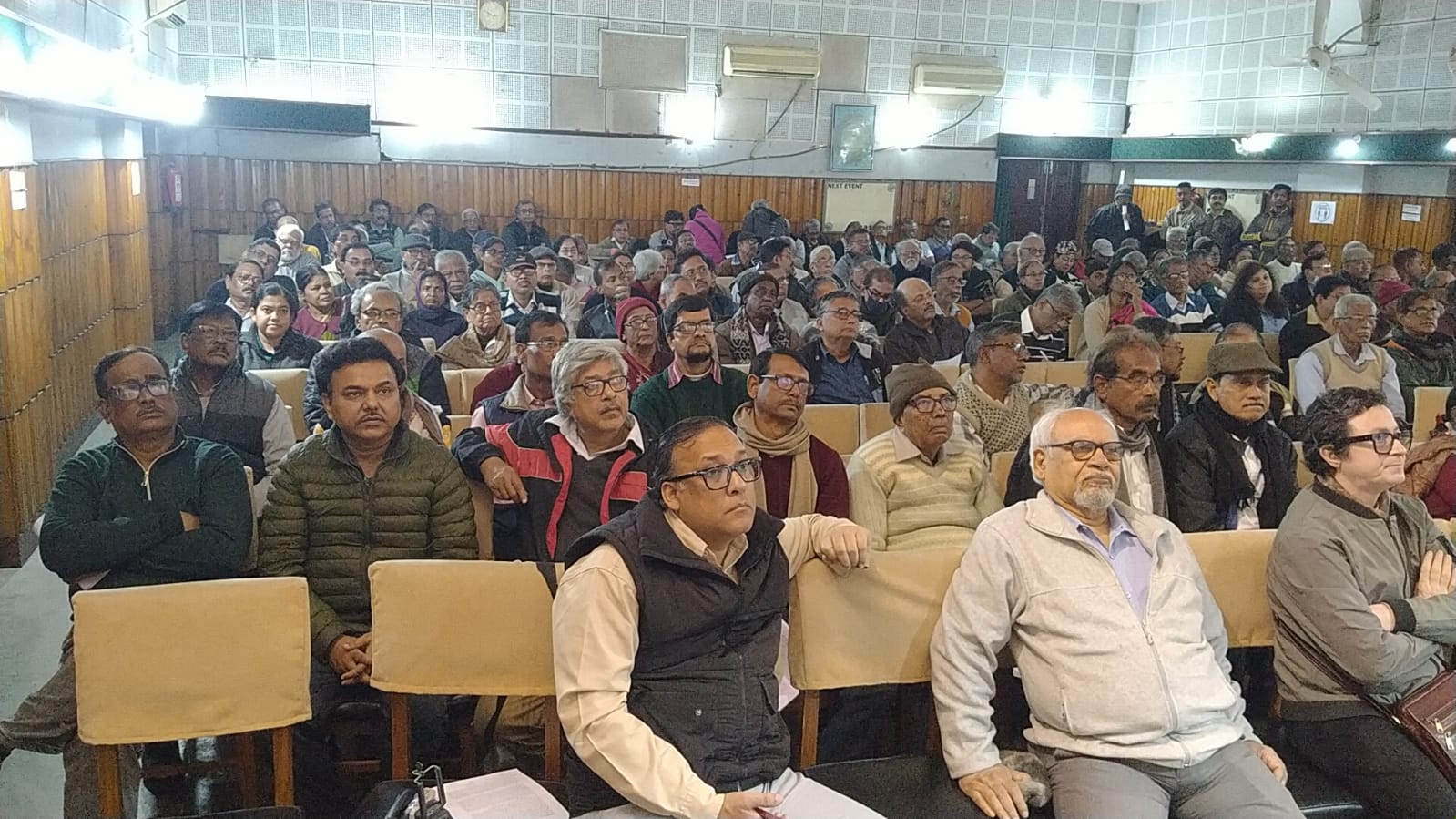
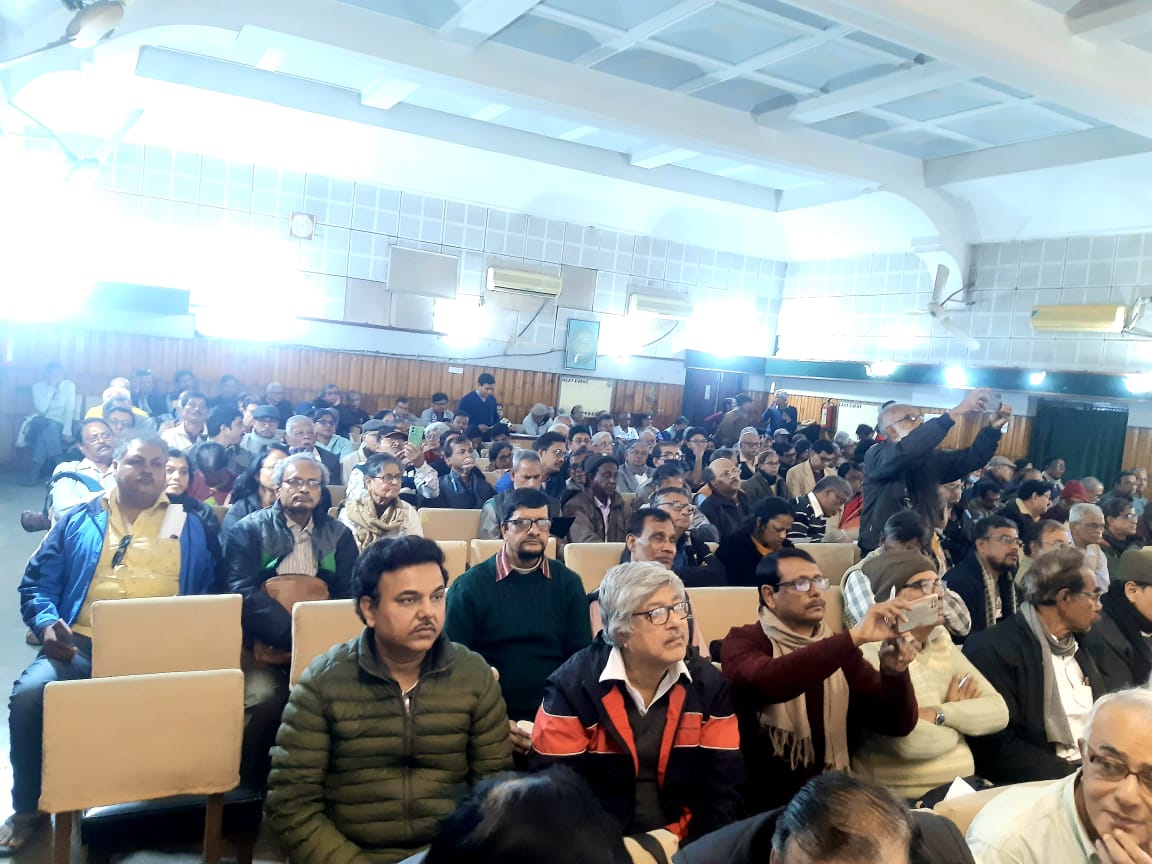

The convention began with an opening address by Dr. Arun Singh (neonatologist, researcher and advisor, MoHFW, GoI), who emphasized that healthcare must be free from all forms of discrimination. He categorically stated that no patient should face discrimination on the basis of race, religion, language, caste or any other identity. Dr. Singh also highlighted that the current health situation in India is deeply troubled, marked by increasing inequality, privatization and weakening of public health services.
Following this, Dr. Fuad Halim, placed the West Bengal draft resolution before the convention. The draft resolution demands: the creation of the Right to Health, access to free and quality medicines at government healthcare facilities and ensuring rights and dignity of health workers. The resolution also critically examined the condition of the public health system, the impact of privatization and the growing burden of healthcare expenses on common people. From JSA, Dr. Indranil shared experiences from the recent campaigns and efforts of the Karnataka public health movements, explaining how people’s struggles brought health rights into the center of public discourse. He also highlighted the alarming rise in out-of-pocket expenditure on healthcare in India, which continues to push millions into poverty.
Around 20 different organizations present at the convention actively participated in the discussion on the draft resolution and offered valuable suggestions to strengthen the document and the future course of the people’s health movement. The discussion was participatory and reflected diverse regional and sectoral experiences. Professor Malini Bhattacharya (former MP and earlier President, AIDWA) addressed the convention and stressed that the government must substantially increase public health expenditure. She pointed out that due to low health budgets, problems such as malnutrition and anemia among poor women are increasing. She criticized the government’s policy of diverting a major share of health funds towards insurance-based schemes instead of strengthening the public healthcare system and addressing the social determinants of health.
The convention witnessed wide participation, with around 250 delegates from 70-80 organizations from different parts of West Bengal, making it a broad-based and representative gathering. Several eminent doctors and public health activists were also present, including Dr. Manas Gumta, Dr. Utpal Bandopadhyay, Prof. Satyajit Chakraborty, Dr. Subarna Goswami and Dr. Moumita Chatterjee, whose presence further enriched the deliberations.
The proceedings of the convention were conducted by a Presidium, comprising of physicians, scientists, academicians, researchers, trade union members and activists. The convention also saw the launch of the Janaswasthya Udyog Samanya Manch (JUSM). At the conclusion of the convention, it was unanimously decided to appoint Dr. Fuad Halim and Dr. Satyajit Chakraborty as Joint Convenor of the JUSM. The convention also unanimously resolved to form a 50-member Managing Committee (Parichalana Samiti) to coordinate, guide and carry forward the activities of the Janaswasthya movement under the banner of Janaswasthya Udyog Samanya Manch. In addition, it was unanimously decided to propose the formation of an Advisory Board (Upadeshta Mandal) for the JUSM. This body is open to organisations that accept the JUSM charter and oppose commercialising health and care.
The Janaswasthya Convention successfully reaffirmed the collective commitment of people’s organizations, health activists and medical professionals to the struggle for equitable, accessible, and universal public healthcare. This convention marked an important milestone in the 25-year journey of the National Health Assembly and Janaswasthya Abhiyan and strengthened the resolve to continue the fight for health as a fundamental right – a crucial need that is overdue in India.

Respond to the spreading public health crisis of spurious or substandard drugs.
Strengthen the regulatory mechanism by filling up all vacant posts including drug inspectors.