
- Drug Action Forum, Karnataka (DAF-K), Sarvatrika Arogya Andolana, Karnataka (SAA-K)
“When you want something, all the universe conspires in helping you to achieve it’’
Paulo Coelho
Drug Action Forum Karnataka (https://daf-k.blogspot.com/) an organisation campaigning for universal access to free and quality medicines and diagnostics in Karnataka and Sarvatrika Arogya Andolana Karnataka (SAAK, www.saakarnataka.org), a people’s campaign for Universal Health Systems in Karnataka together decided to launch a statewide jatha (rally) in 2025. This was chiefly led by Dr. Gopal Dabade, a veteran health activist in the state. All the district level network representatives of various peoples’ movements were contacted and a detailed plan chalked out. Preparations for the Jatha began in August 2023.
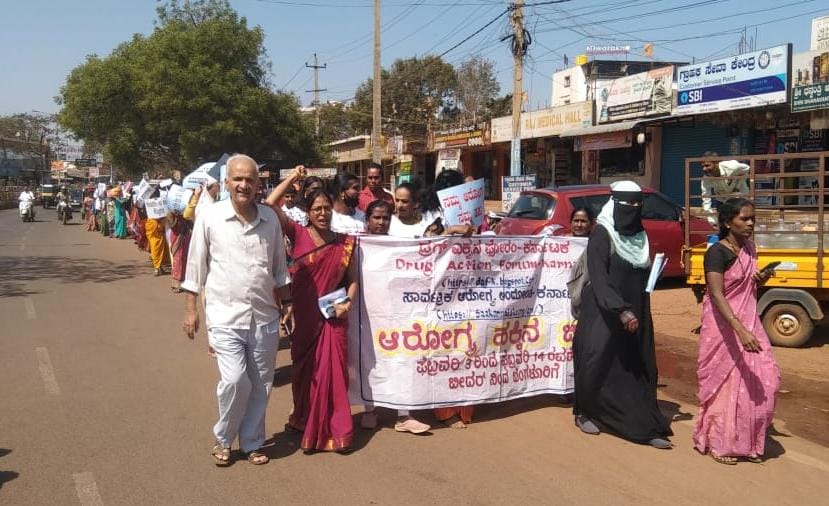
The main objective of the jatha was to raise awareness and mobilise people around the issues of access to free quality medicines and for bringing in a Right to health care Act in the state. The immediate context was the death of mothers in public healthcare facilities due to a non-standard quality (NSQ) medicine, Ringer lactate, supplied by the Karnataka Medical Supplies Corporation Limited (KSMCSL) to the public healthcare facilities. Even though the state governments have repeatedly claimed that there is a free medicine policy in the state, it is not reflected on the ground with people incurring huge Out-Of-Pocket Expenditure (OOPE) in purchasing medicines. So it has been a long standing demand from the public health movement in Karnataka for ensuring access to quality free medicines in the state. District level networks were alerted about the necessity of making Free and Quality Medicines available at all government healthcare facilities throughout Karnataka as also the need for a Right to Health Act in the state. In addition to dialoguing with the district level partners, there was a need for preparing succinct and engaging IEC material, in English and Kannada, to be distributed during the Jatha.
“As we planned the Jatha, we had several apprehensions: how will the grassroots communities respond, will we have enough people in our rallies and so on. But that did not deter us from moving forward. Overall, most people who agreed to participate, joined the Jatha” — Gopal Dabade, member, DAF-K & SAA-K
The Jatha began on 3rd February 2025 from Bidar, considered Karnataka’s northernmost district and one of the most backward districts of Karnataka. The Jatha had only three demands – First, that all medicines received at the district level government drug warehouses should be quarantined and tested for quality and the process be made transparent, before being released for use. Secondly, anyone who walks into a government facility should be provided with all the necessary medicines at the facility only and that no prescription should be given for purchasing medicines outside. Third, the “Right to Health Act.” as implemented in Rajasthan should be enacted for the state of Karnataka too.
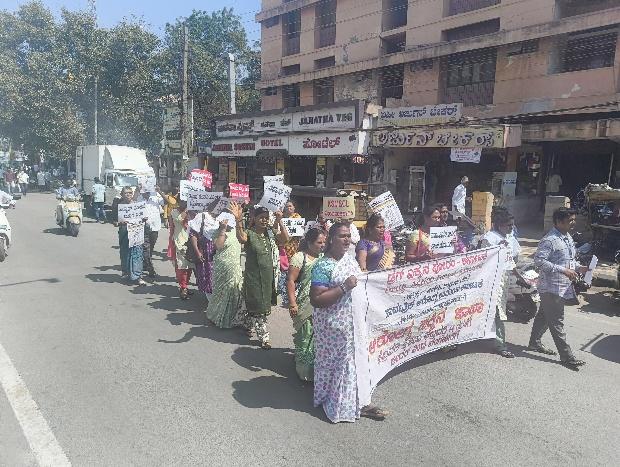
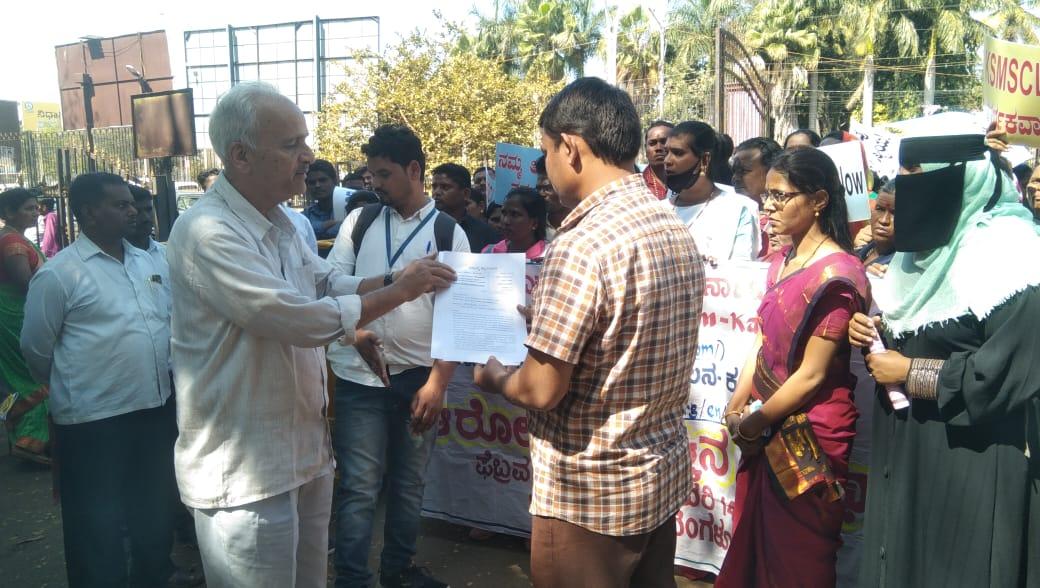
The Jatha began from Bidar on 3rd February 2025, with a press conference, followed by a rally through the streets with sloganeering, pamphlet distribution on the three major demands, culminating with the submission of a memorandum to the Deputy Commissioner. Subsequently, the Jatha moved to the next district, namely, Gulbarga, then to Raichur, then Koppal and then Ballari. People who participated in the rallies were diverse. Among them was a lawyer who has been working on ‘Access to medicines’ for over 2 decades to a very senior state level human rights activist and various district level activists. District level human rights organisations mobilised various grassroots communities in the districts. The standard process followed in all the districts included holding a public rally followed by submitting a memorandum to the district level officials. Many local level people’s movements also joined the jatha – for instance, an ongoing campaign in Raichur district demanding an AIIMS hospital at Raichur decided to join forces with the Jatha.
At the same time, another partner network “Samagra Graamen Ashram” (https://www.daijiworld.com/news/newsDisplay.aspx?newsID=679478), and associates held a rally and submitted a memorandum on the three issues in four districts, namely, Udupi, Shivamogga, Mysore and Coorg. In addition, network members in Haveri district submitted a memorandum to the Deputy Commissioner on the three issues.
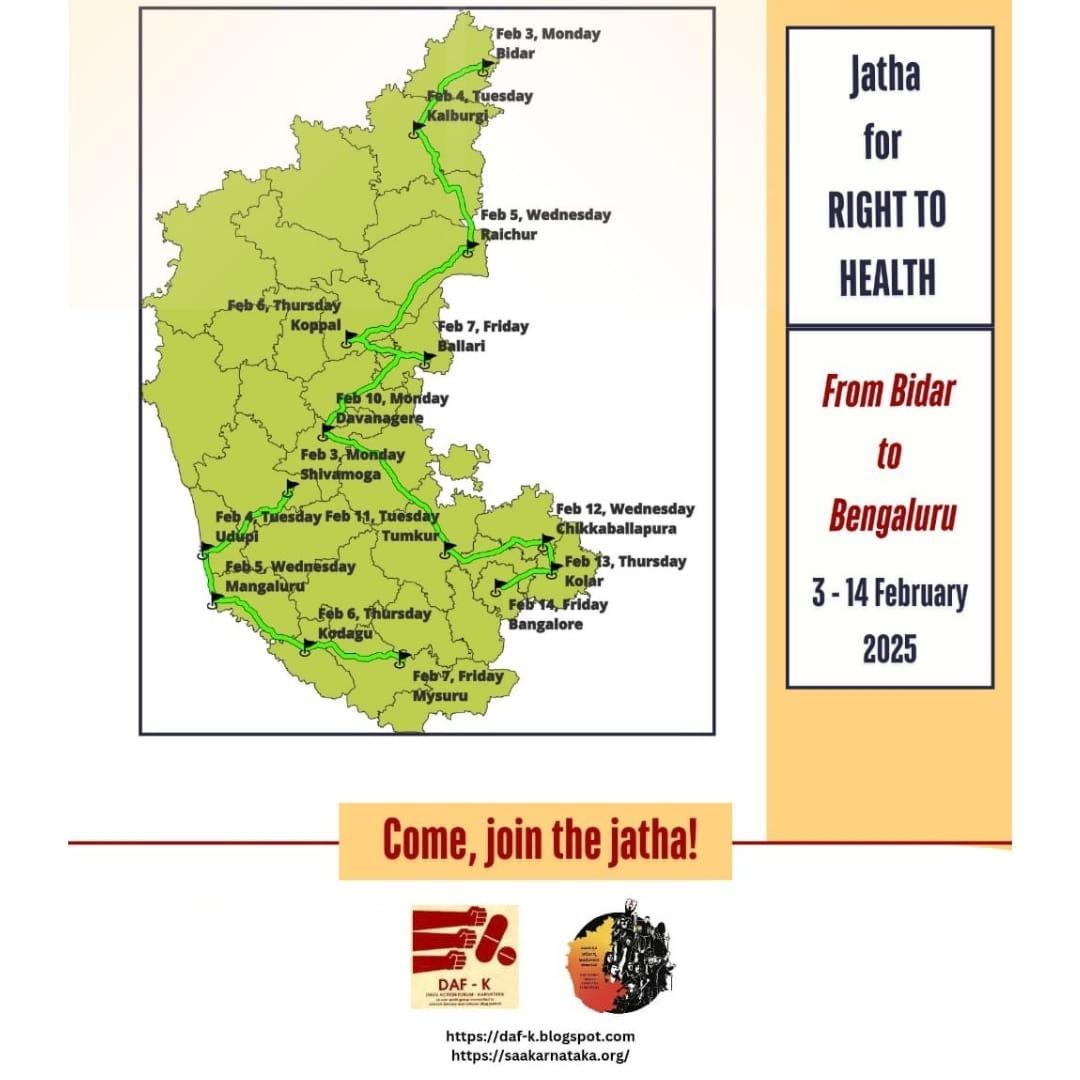
The Jatha culminated on 14th February in Bangalore at Freedom Park with a day-long gathering of 60 people. The Karnataka minister for health and family welfare who was invited to the event had agreed to participate. But a crisis of water-borne disease in another district resulted in the minister giving the Jatha event a miss.
In total, the Jatha covered fifteen districts. A total of seven district level press meets were held which were all well attended. On an average, fifteen media persons participated in these press meets.The movement thanks all those who supported and stood with the Jatha. But the struggle for Access to Free and Quality Medicines at government healthcare facilities and the enactment of the Right to Health Act in Karnataka is far from over. Even though not directly attributable to the Jatha, but mostly due to consistent advocacy, there have been some visible changes in Karnataka’s public health system. KSMSCL has for the first time got an IAS officer as director. The Karnataka government has committed more funds for medicine procurement. The list of medicines has been expanded and KSMSCL is taking steps to create an information system which captures real time data regarding stocks of medicines and so on. The state has also taken a first step towards enacting a Right to Health bill. But the struggle for accessible and reliable public health systems continues.

நல்ல பணி. வாழ்த்துகள்.